Home » Junk Removal » The Complete Disposal Guide: How to Get Rid of Paint, Electronics, Tires, and Other Tricky Items

The Complete Disposal Guide: How to Get Rid of Paint, Electronics, Tires, and Other Tricky Items
Not everything can go in your regular trash can, and figuring out what to do with the stuff that doesn’t belong there is one of the most common (and most confusing) parts of any cleanout, renovation, or move. Old paint cans, dead electronics, worn-out tires, and a handful of other “what do I even do with this” items each have their own disposal rules, and getting it wrong can mean fines, environmental harm, or a rejected pickup at the curb.
This guide breaks down exactly how to dispose of the items people get stuck on most, so you’re not left guessing.
Why Some Items Can't Just Go in the Trash
Regular trash pickup and landfills are designed for household waste, not chemicals, batteries, electronics, or anything that can leak, ignite, or leach into soil and water. Many items are legally classified as household hazardous waste (HHW) or electronic waste (e-waste), both of which require special handling in most cities and states. Tossing them in with regular trash can result in:
- Fines from your local waste authority
- Environmental contamination
- Fire or chemical hazards for waste collection workers
- Your trash simply not being picked up
The good news: almost every “tricky” item has a proper disposal path.
How to Dispose of Paint
Paint disposal depends entirely on whether it’s still usable, and what type of paint it is.
Latex (water-based) paint:
- If it’s dried out, it can often go in regular trash. Remove the lid and let it air dry, or mix in cat litter or a paint hardener to speed up the process.
- If it’s still liquid and usable, many hardware stores and donation centers (like Habitat for Humanity ReStores) accept leftover paint for reuse.
Oil-based paint:
- Oil-based paint is considered hazardous waste in most areas and cannot go in regular trash, even when dried.
- It needs to be taken to a household hazardous waste facility or a designated collection event.
Spray paint cans:
- Empty cans can often go in regular trash or recycling, depending on local rules.
- Cans with remaining product are typically treated as hazardous waste.
Tip: Never pour paint down a drain or onto the ground, it’s one of the most common ways paint contaminates water supplies.
How to Dispose of Electronics (E-Waste)
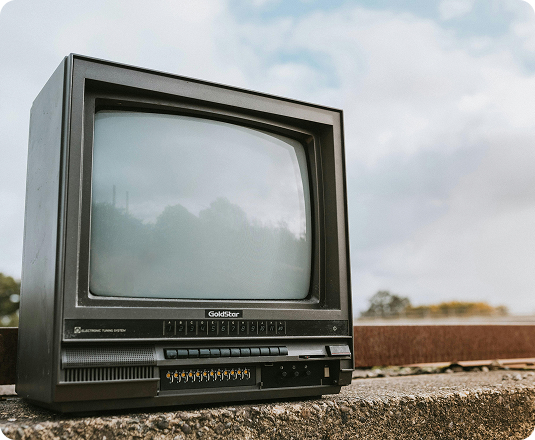
Old TVs, computers, phones, printers, and other electronics contain materials like lead, mercury, and lithium that make them unsafe for regular landfills and in many states, illegal to throw away with household trash.
Options for e-waste disposal:
- Retailer take-back programs: Many electronics and office supply stores accept old devices for recycling, sometimes for a small fee.
- Manufacturer recycling programs: Most major electronics manufacturers offer mail-back or drop-off recycling.
- Local e-waste recycling events: Cities frequently host free e-waste collection days.
- Certified e-waste recyclers: Look for facilities certified under R2 or e-Stewards standards to ensure responsible processing.
Before disposing of any device: Wipe personal data from phones, computers, and hard drives, and remove batteries when possible, since batteries often require separate disposal.

How to Dispose of Tires
Tires are bulky, non-biodegradable, and banned from most standard landfills because they trap gas and can resurface over time, creating both space and fire hazards.
Common tire disposal options:
- Tire retailers: Most shops will dispose of old tires for a small fee when you purchase new ones.
- Municipal collection events: Many cities hold periodic tire drop-off days, often free or low-cost.
- Recycling centers: Some facilities recycle tires into rubber mulch, playground surfacing, or fuel.
- Landfill tire fees : Some landfills accept tires for a per-tire fee, but not all do, always call ahead.
Avoid: Dumping tires illegally, which is a common issue in many areas and typically carries steep fines.
Other Tricky Items and How to Handle Them
Mattresses and box springs: Many areas require mattresses to be wrapped in plastic before disposal to prevent bed bug spread. Some cities have mattress recycling programs that break them down into steel, foam, and fabric.
Propane tanks: Never throw propane tanks in regular trash. Small tanks can often be exchanged or recycled at hardware stores, while larger tanks typically require a hazardous waste facility.
Batteries: Household alkaline batteries can often go in regular trash in many states, but rechargeable and lithium batteries should be recycled because they pose fire risks in trash and recycling trucks.
Appliances (refrigerators, AC units, freezers): These often contain refrigerants that must be professionally removed before disposal. Many municipalities require appliance recycling rather than standard bulk pickup.
Fluorescent bulbs and CFLs: These contain small amounts of mercury and should be taken to a hazardous waste facility or a retailer with a bulb take-back program, not thrown in regular trash.
Yard waste and chemicals (pesticides, fertilizers): Leftover lawn chemicals are classified as hazardous waste in most areas and should be taken to an HHW facility rather than poured out or thrown away.
When It's Easier to Have Someone Else Handle It
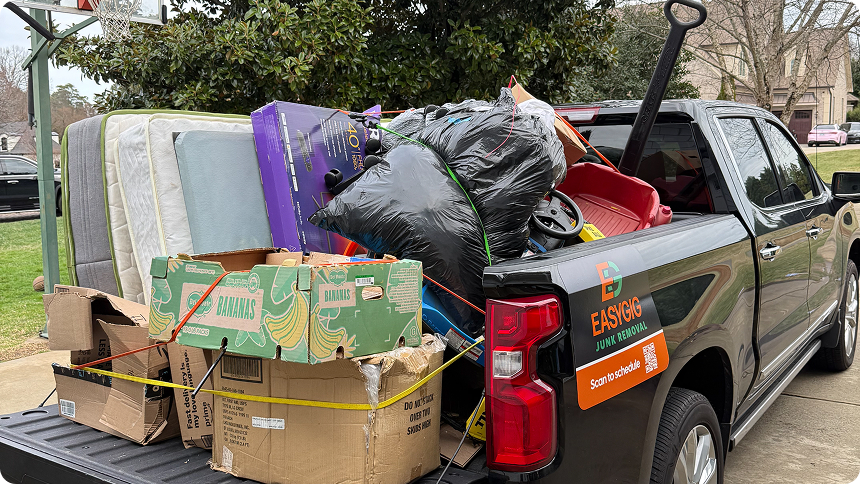
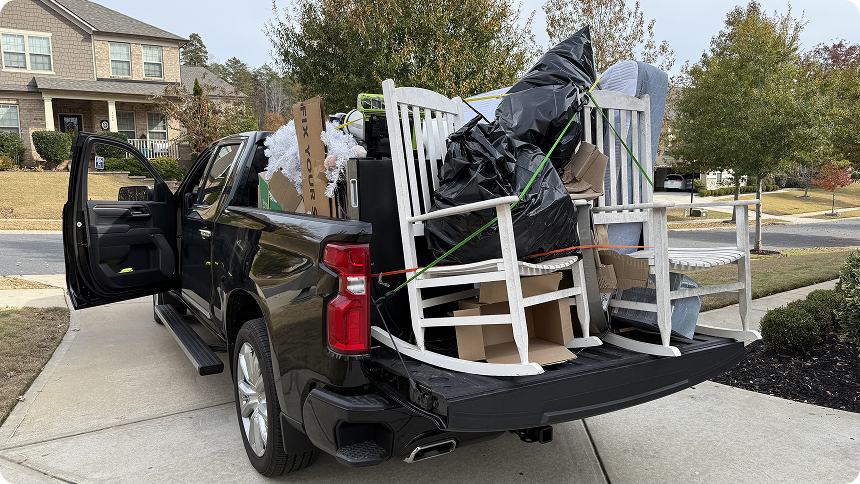
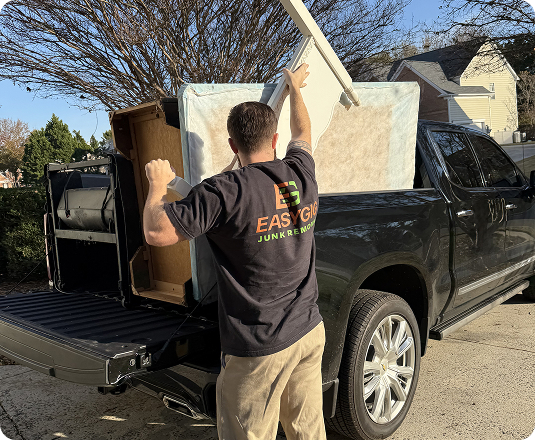
Sorting out the right disposal method for every item in a cleanout, paint here, electronics there, tires somewhere else entirely, takes time most people don’t have, especially during a move, renovation, or property turnover. On-demand junk removal services like EasyGig can take the non-hazardous items off your hands, including furniture, electronics, tires, appliances, and general clutter, so you’re left with a much shorter list to handle yourself.
Note that paint and other household hazardous waste, such as solvents, pesticides, pool chemicals, and similar items, require a dedicated hazardous waste facility and generally can’t be picked up through standard junk removal services, including EasyGig. Use the guidance above to find the right hazardous waste drop-off location near you.
Frequently Asked Questions
Can I put paint cans in my regular trash? Only if the paint is fully dried (for latex). Liquid paint and all oil-based paint typically require hazardous waste disposal.
Do I have to pay to dispose of electronics? It depends on the item and location. Many retailer and manufacturer programs are free, while some facilities charge a small fee for larger items like TVs.
Why won’t the landfill take my tires? Many landfills ban tires outright due to fire and space hazards, or charge a separate per-tire fee. Always check with your local facility before hauling tires there.
What’s the easiest way to get rid of multiple tricky items at once? For non-hazardous items like electronics, tires, mattresses, and appliances, booking an on-demand junk removal service is usually the fastest option. Hazardous items like paint and chemicals still need to go to a dedicated hazardous waste facility.

Skip the Guesswork with EasyGig
You now know how to safely dispose of paint, electronics, tires, and other hazardous or tricky items on your own. For everything that isn’t hazardous—old furniture, electronics, appliances, tires, and general clutter, EasyGig picks it up and disposes of it properly, so you’re not stuck making a dozen trips yourself.
Ready to clear it out the easy way?